About Shane Koh
I’m Shane Koh — a historian, educator, and storyteller with a passion for exploring where cinema, memory, and material culture meet. My work is rooted in the belief that film posters are more than marketing; they are historical documents, cultural signals, and visual anchors that reveal how societies imagine themselves.
My background in History and War Studies, together with over a decade of teaching and curriculum leadership, shapes the way I read images, spaces, and stories.
I’m drawn to the lives and afterlives of films — the way a poster survives long after a cinema is demolished, or how a re-release reopens conversations across generations. These fascinations guide the talks, workshops, and programmes I design for schools, cinemas, cultural institutions, and public audiences.
Across all my work, my aim is simple: to help people look closer, think deeper, and see the familiar — films, posters, or the cities we live in — in new and more meaningful ways.
Talks and Exhibitions

Educator Talks
In my work with schools and educational spaces, I offer sessions that invite educators to consider how visual culture—particularly film posters—can support historical thinking and inquiry. These workshops explore practical ways of reading images, understanding their contexts, and connecting them to classroom practice. They are also chances for educators to slow down, reflect on their craft, and think about how students encounter the past through objects, spaces, and stories. Each session grows from conversation, shared curiosity, and a mutual interest in widening the tools we use to make learning meaningful.
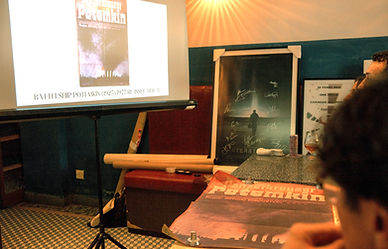
Social Lectures
I also offer talks for bars, pubs, cinemas, libraries, cultural spaces, and community groups that are interested in the ways film posters open up conversations about memory, place, and the stories we share. These sessions use posters as starting points to think about how films travel across time, how cities change around us, and how certain images stay with us long after we first encounter them. Each talk is built around observation and dialogue, creating space for audiences to reflect on familiar films through quieter, more thoughtful lenses. My aim is simply to offer a way of seeing that connects personal experience with the wider histories carried in paper, print, and cinema.